
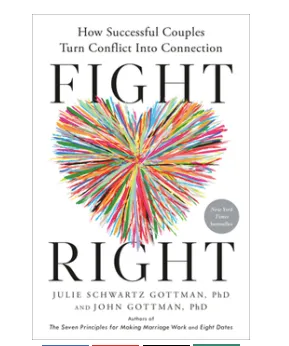
As a couples therapist I’ve noticed most couples I talk to see conflict as a bad thing. In actuality the couples who say they “never fight” are the ones marriage therapists tend to be most concerned about. In the book “Fight Right,” Julie and John share research backed strategies to help couples understand their own conflict style and how to manage conflict in a healthy way.
Sometimes if people grew up in homes where their parents were passive aggressive communicators or even overtly aggressive they learned to be conflict avoidant. This creates a barrier to solving problems, leads to resentment, and makes divorce rates higher.
Some of the Gottman tools I use in my own relationship and share in my practice are:
-”I” statements. When approaching conflict with a partner it is best to say things like “I feel stressed. I need your help” instead of “you never help me with anything.” which can feel like an attack.
-Softened start up- if we come at our partner when we are angry and don’t pay attention to tone and volume this can also feel like an attack. Paying attention to volume, tone, and words leads to better outcomes.
-Taking a break. During conflict if one or both partners are flooded with emotions this is not the best time to continue with the conflict. Studies show we actually lose IQ points while flooded. The Gottman’s recommend taking a break of at least 20 mins, but not more than a day. During this time the partners do not necessarily have to take a break from each other, only from the conflict.
-Emotional bank account tool. The Gottman’s suggest that during conflict we need to have 5 positives with our partner to every 1 negative. The positives can be simple like a smile, nod, or gentle touch. Interesting side note: outside of conflict the Gottman’s recommend that we have 20 positives with our partner for every 1 negative.
 Grow Your Own Way Therapy